BLWE Resource
How Football Combines Work
Football combines help athletes measure performance and learn where they can improve. The best combine experience is organized, honest, and connected to development.
This guide answers
- What happens at a football combine?
- Which drills are usually tested?
- How should parents understand the results?
Common combine stations
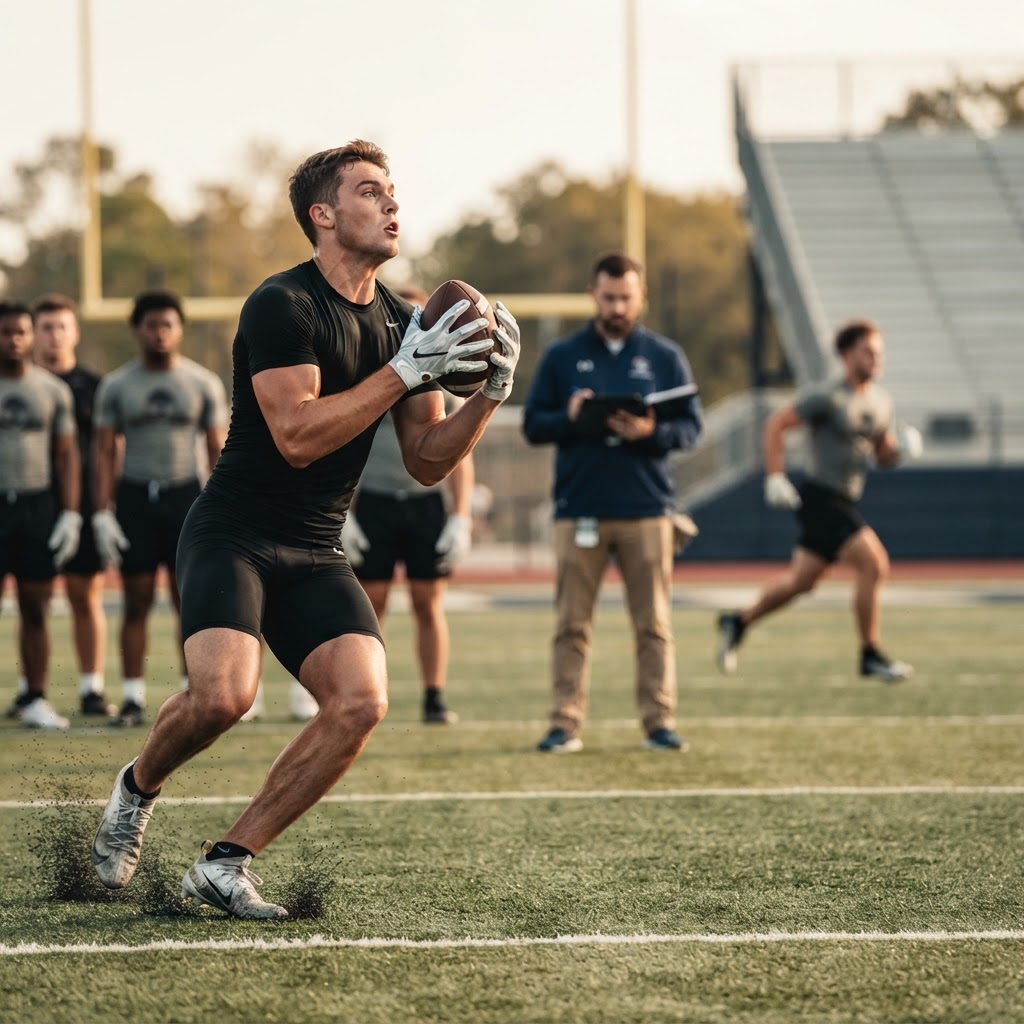
Many combines include the 40-yard dash, shuttle, vertical jump, broad jump, height, weight, and position movement. Not every event is the same, so families should review the event details.
Why structure matters
Organized stations, clear instructions, consistent timing, and accurate recording help make testing more useful for athletes and parents.
What results can and cannot do
Results can show progress and support a profile, but they do not guarantee college interest or replace film, academics, character, and position skill.
Questions athletes and parents ask
Are football combines only for elite athletes?
No. Developing athletes can use combines to learn, test, and identify improvement goals.
Should athletes train before a combine?
Yes. Sprint starts, change of direction, jumping technique, and warm-up habits can all affect performance.
Explore the full BLWE recruiting library
Every topic below starts with a main guide and links to the detailed pages that support it.
Ready to take a next step
Ready to take the next BLWE step?
Use this education to choose a practical next step: registration, athlete evaluation, sponsorship interest, or a direct question for BLWE.