Special Teams Football Recruiting: What College Coaches Actually Evaluate
Table of Contents
- TLDR
- Special Teams as a Real Recruiting Path
- The Five Special Teams Roles That Attract College Interest
- What College Coaches Look for on Special Teams Film
- Skill Development by Position
- Verified Testing and Profile Building for Special Teams
- How to Communicate Your Special Teams Value to Coaches
- Special Teams Recruiting Checklist
- Free Recruiting Readiness Snapshot
- Education Disclaimer
TLDR
Special teams is not a consolation prize in college football recruiting. It is a legitimate evaluation path for players who develop position-specific skills, maintain strong academics, and communicate their value to programs that need those skills. This guide covers what college coaches actually evaluate at kicker, punter, long snapper, return specialist, and gunner, and how to position your special teams ability as a recruiting asset.
Special Teams as a Real Recruiting Path {#real-recruiting-path}
The perception that special teams does not matter in recruiting is one of the most common misconceptions among high school athletes and their families. College football rosters carry 85 scholarship players and up to 120 total, and every program needs specialists who are specifically recruited for their role in the kicking game.
Special teams recruiting is real at every level: Power Four, Group of Five, FCS, Division II, Division III, and NAIA programs all recruit kickers, punters, long snappers, and return specialists with varying levels of scholarship availability. The market for elite specialists is national in scope because the talent pool at each position is smaller than at traditional skill positions.
High school athletes who develop genuine special teams skill have a recruiting path available regardless of their position on the offensive or defensive side of the ball. The athletes who navigate it best understand what coaches evaluate, how to present their skill on film, and how to contact the right people within a coaching staff.
The Five Special Teams Roles That Attract College Interest {#five-roles}
Placekicker. Programs recruit both kickoff specialists and field goal kickers, though most college kickers handle both. Distance, accuracy, and consistency from varying distances and field conditions are the primary evaluation criteria.
Punter. Gross average and net average (factoring in coverage) are the measured outcomes, but hang time, directional placement, and consistency under pressure are what coaches evaluate on film. A punter who can pin opponents deep and control field position is as valuable as any skill player on game day.
Long snapper. Long snapping is a highly specialized skill that opens its own recruiting track. College programs cannot function without a reliable long snapper, and the talent pool is genuinely limited. Recruits who develop elite long snap consistency have a path to programs that would not recruit them for any other reason.
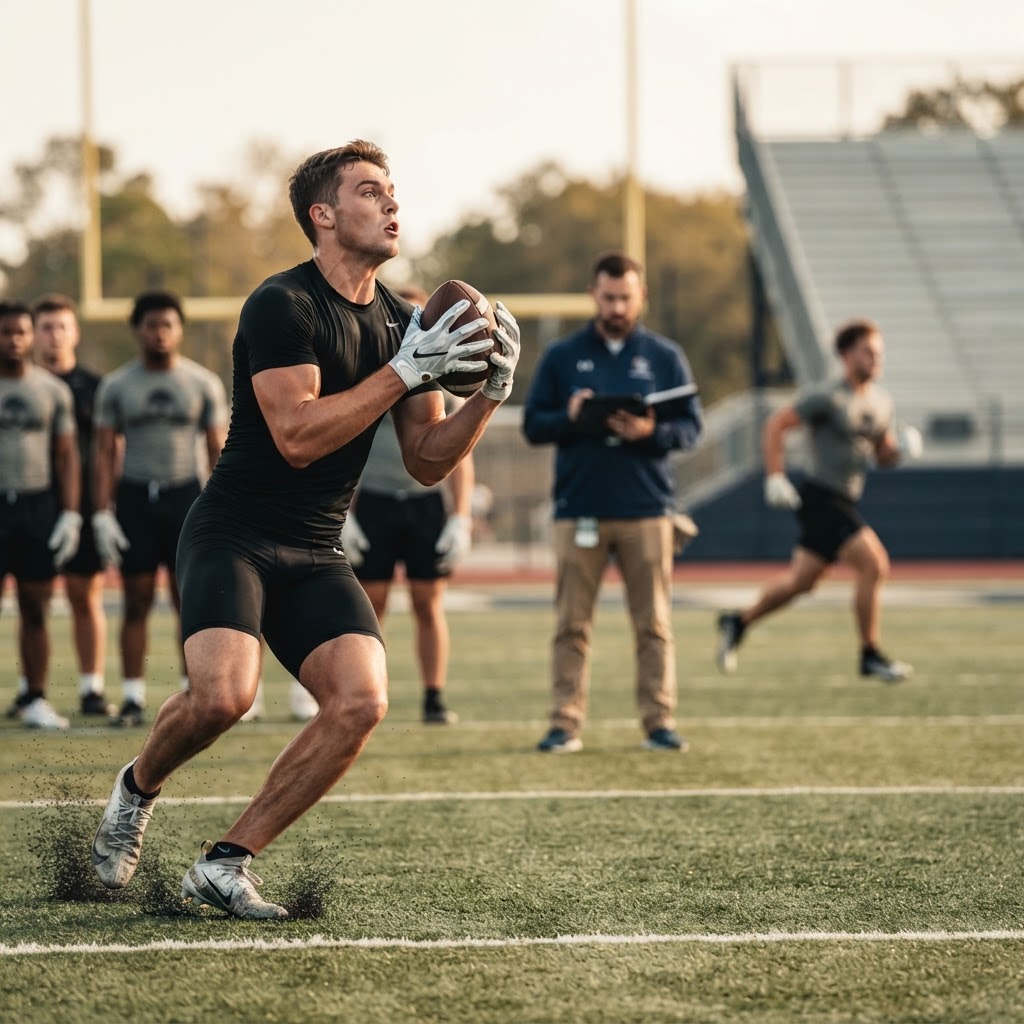
Return specialist. Punt returner and kickoff returner are positions coaches recruit separately from general skill players, though overlap is common. The ability to make quick decisions in space, catch the ball cleanly under pressure, and break tackles in open field are the evaluated skills.
Gunner and coverage specialist. This is the least commonly recruited role in isolation, but players who excel in special teams coverage, break down blockers, and make tackles consistently in the kicking game often appear on college coaching staffs' radar as multi-role prospects who can contribute immediately.
What College Coaches Look for on Special Teams Film {#film-evaluation}
The first question a college coach watching special teams film asks is: does this athlete do their job every time, or just sometimes?
Consistency is the primary evaluation criterion at every specialist position. A kicker who hits three long field goals but misses short-range attempts in critical situations is a different evaluation than one who converts consistently across the range of expected kicks. A punter with two outstanding kicks and three shankable ones raises concern about pressure performance.
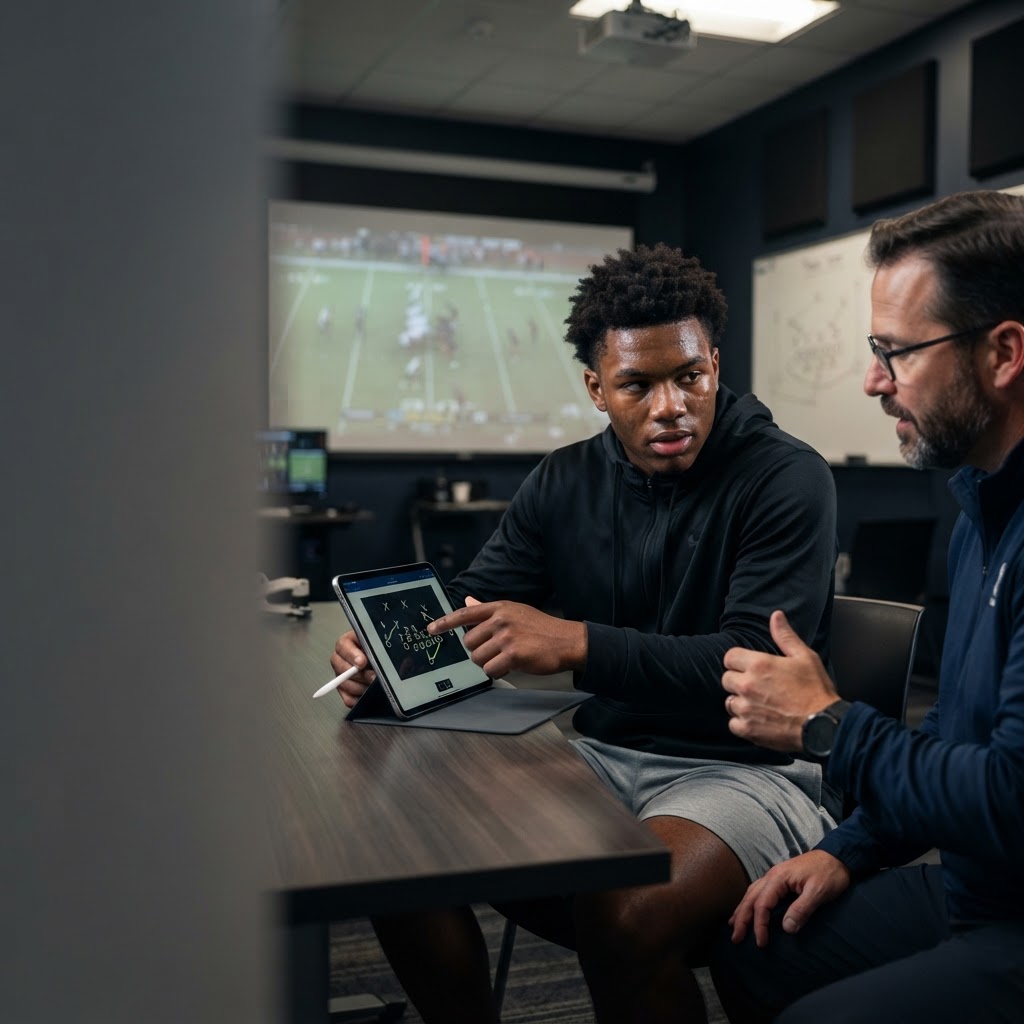
Film should show multiple game situations. Scouts and coaches want to see specialists perform in different weather conditions, under varying pressure, and from different positions on the field. A single showcase performance means less than consistent execution across a full season of film.
Effort on coverage and as a blocker. Specialists who go through the motions on coverage are a liability in a program that values special teams. Film that shows a kicker or punter making effort in coverage, blocking on returns, and competing on every snap signals that the player values the kicking game beyond their individual role.
Technical markers by position. For kickers: plant foot consistency, hip rotation through the ball, and follow-through. For punters: drop consistency, contact point, and leg whip. For long snappers: ball speed, trajectory consistency, and hand position. Coaches know the technical markers at each position and evaluate them specifically on film.
Skill Development by Position {#skill-development}
Kicker Development
Kicker development requires consistent technical reps more than volume reps. The focus areas:
- Plant foot mechanics. The plant foot determines direction and contact point. Inconsistency in plant foot placement is the most common technical issue in developing kickers.
- Hip rotation. Power and accuracy both come from full hip rotation through contact. A short or tense hip rotation produces flat kicks with inconsistent direction.
- Kickoff technique. Kickoff and field goal mechanics are different. Both require separate technical attention, and coaches note when a kicker has refined mechanics for each situation.
- Mental routine. A repeatable pre-kick routine reduces performance variance in game situations. Developing this habit in practice produces the consistency coaches want to see on film.
Punter Development
- Drop consistency. The drop is the most frequently cited technical fault in punters. The ball should arrive at the same point of the swing on every rep. Training with a ball-drop marker reinforces the habit.
- Contact point. Contact below the knee produces line-drive punts. Contact higher in the swing, with a firm ankle, produces hang time and distance.
- Directional punting. The ability to place the ball to a specific side of the field is a separate skill from distance punting. College coaches value directional placement because it directly affects field position.
Long Snapper Development
- Ball speed. Faster ball speed gives the holder or punter more time to execute. Timed snap speed is a measurable that specialist recruiting services and college coaches note specifically.
- Trajectory. A clean, consistent trajectory that arrives to the same target spot every snap is the standard. Snaps that sail high, drift outside, or arrive with inconsistent spin force the kicker or punter to adjust.
- Blocking after the snap. Long snappers who maintain blocking fundamentals after the snap protect against fakes and rushes. Film that shows a long snapper engaged in protection after the snap is a meaningful technical detail.
Return Specialist Development
- Catch reliability. Muffed punts and kicks are recruiting conversation-enders. Return specialists who catch cleanly, even on difficult bounces and jukes, demonstrate the reliability that coaches require before trusting a player in live game situations.
- Decision-making under pressure. When to call a fair catch and when to field a kick is a judgment call that shows up repeatedly on film. Coaches evaluate decision quality, not just outcomes.
- Open-field tackle-breaking. Return yards are generated in the first ten yards from where a return begins. A returner who can make one or two moves within the first few yards before the coverage collapses consistently produces positive field position.
Verified Testing and Profile Building for Special Teams {#testing-and-profile}
Special teams recruiting profiles require position-specific metrics that differ from those on a skill player's profile.
For kickers and punters: Field goal percentage from specified distances, kickoff distance and hang time, punt average, and punting distance at various angles are the most important documented numbers. Verified testing at camps or combines gives these numbers credibility with coaches who know practitioners can claim any number without context.
For long snappers: Snap speed in seconds (measured from snap to arrival), trajectory consistency, and snapping accuracy from varying distances are the documented metrics specialist programs prioritize.
For return specialists: 40-yard dash (verified), short shuttle, and ball security metrics in live drill situations are the relevant profile data points.
Film remains the primary evaluation tool. Numbers provide context; film provides evidence. A kicker claiming 65-yard field goal range needs film that shows multiple clean strikes at that distance. Numbers without film support are nearly always discounted.
How to Communicate Your Special Teams Value to Coaches {#communication}
Special teams recruits often need to identify the right coach within a staff. Most programs have a dedicated special teams coordinator or a position coach responsible for specialist evaluation. Emailing the head coach or the offensive coordinator about a kicking prospect is less effective than identifying and contacting the special teams coordinator directly.
What to include in a special teams recruiting email:
- Position and graduation year clearly stated in the subject line
- Verified testing metrics or measured numbers for your specific position
- Film link that goes directly to your best technique reps, not a general highlights page
- Academic information: GPA and planned area of study
- Brief introduction to your development history, camps attended, and coaching background if relevant
One of the most effective things a specialist recruit can do is attend position-specific camps or showcases where college coaches evaluate specialists directly. These events create face-to-face evaluation opportunities and produce performance data in a context coaches trust.
Special Teams Recruiting Checklist {#checklist}
- [ ] Document your position-specific performance metrics with verified or measured data
- [ ] Build a film library that shows consistent execution across multiple game situations
- [ ] Develop a technical training routine with regular coaching or review from a qualified specialist coach
- [ ] Identify the special teams coordinator or specialist position coach at programs you are targeting
- [ ] Contact coaches with your position, graduation year, GPA, measured performance metrics, and film link
- [ ] Attend at least one position-specific specialist camp or showcase each year
- [ ] Maintain strong academic standing to qualify for target programs
- [ ] Track your development with updated metrics and film every semester
- [ ] Update your recruiting profile after each season with current numbers and new film
- [ ] Research programs at the right level for your measurables and academic profile
Free Recruiting Readiness Snapshot {#cta}
Be Like Wat3r Exposure LLC offers a free Recruiting Readiness Snapshot at belikewaterexposure.net. The Snapshot evaluates how complete and organized your current recruiting profile is, so you know what to address before reaching out to college programs.
The Snapshot measures your preparation. Recruiting outcomes depend on decisions made by individual programs.
Visit belikewaterexposure.net to get your free Snapshot.
Education Disclaimer {#disclaimer}
This article is for educational purposes only. Be Like Wat3r Exposure LLC does not guarantee scholarship offers, roster spots, or any specific recruiting outcome. Decisions regarding roster composition, financial aid, and scholarships are made by individual college programs, athletic departments, and admissions offices. Special teams skill development and profile preparation may increase visibility within the recruiting process, but they do not guarantee any result. This content is intended to help athletes and families understand the recruiting process for specialist positions.
Know exactly where your recruiting profile stands.
Get Your Free Recruiting Readiness Snapshot