Safety Development Guide: Football Drills, Film, and Recruiting for the Free and Strong Safety
Primary keyword: safety football drills
Table of Contents
- The Safety Position in Modern College Football
- Free Safety vs. Strong Safety: What Colleges Recruit
- Safety Football Drills: Coverage and Zone Work
- Run-Support and Tackling Drills
- Man Coverage Drills for Safeties
- Physical Development for the Position
- Film Strategy for Safety Recruits
- Recruiting Timelines and Outreach
- Common Mistakes Safety Recruits Make
- How BLWE Supports Safety Development
- Disclaimer
The Safety Position in Modern College Football
The safety position has transformed over the past decade alongside the spread offense. Where programs once used safeties primarily as deep coverage players and run-stoppers, today's college defensive coordinators ask safeties to cover slot receivers, blitz from multiple alignments, play linebacker in sub-packages, and function as the defense's quarterback in pre-snap communication.
This versatility raises the floor on what safety recruits need to demonstrate, and it expands opportunity for Michigan and Midwest athletes who develop the right combination of physical tools and football intelligence.
College coaches evaluate safeties through a layered lens: Can you communicate a coverage call before the snap? Can you play the run at the line of scrimmage against a tight end or a pulling lineman? Can you stay in phase against a slot receiver in man coverage? These are different skills, and your film, your combine results, and your training background all speak to how many of them you have.
Free Safety vs. Strong Safety: What Colleges Recruit
Understanding which sub-position fits your profile helps you target the right programs and frame your recruiting outreach accurately.
Free Safety profiles tend to favor:
- Elite range and closing speed in the deep third or deep half
- Ball-tracking ability in zone coverage
- Reliable open-field tackling technique
- Communication and pre-snap recognition skills
Free safeties are often the smallest defensive players on the field. Speed and instincts are weighted heavily. Programs running two-deep zone concepts or quarters coverage need free safeties who can read the quarterback's eyes from depth.
Strong Safety profiles tend to favor:
- Physical frame willing to support the run inside the box
- Man coverage reliability on tight ends and slot receivers
- Blitz production from the box or off the edge
- Enough range to play single-high in rotation
Strong safeties are often recruited with physical dimensions closer to a linebacker. If you are 6'0" or taller with a bigger frame, emphasize your run support and man coverage reps in every communication with coaches.
Many athletes fit a hybrid safety profile, productive in both roles. Flexibility is an asset. If your film shows you playing both alignments at a high level, emphasize that versatility in your recruiting profile.
Safety Football Drills: Coverage and Zone Work
Zone coverage is the foundation of every safety's defensive identity. These drills target the core mechanics of zone reads and rotations.
Pedal-and-Drive
From a two-point or press alignment, backpedal under control and fire downhill to a throw location on command. Focus on: keeping hips low during the backpedal, maintaining shoulder-width base, and driving through the break without crossing feet.
Zone Drop Alignment
Place cones at hash marks and sideline landmarks. Practice finding your zone landmarks during a simulated pre-snap cadence. The objective is getting to your zone drop without watching your feet.
Eyes Drill (QB Tracking)
Face a partner who simulates QB movement while you read and redirect. The drill trains your eyes to stay on the quarterback rather than locking onto a receiver. This directly translates to bracket coverage reads and Cover 2/Cover 4 rotations.
High-Point Catch Contest
Throw 50/50 balls near the back of the end zone or over the middle. Practice high-pointing the football, jumping into the catch point before the receiver does. Safety interceptions often come in these contested catch windows.
Angle Tackle Circuit
Set up a four-cone drill requiring you to close on a ball carrier from a 45-degree angle and simulate a form tackle or strip-tackle attempt. Angle tackling is one of the highest-value skills a safety can show on film.
Run-Support and Tackling Drills
Safeties who cannot support the run at the line of scrimmage limit a defense's flexibility. Coaches who run quarters or split-field coverage need safeties who can become eighth defenders in the box when the coverage rotation calls for it.
Fit-and-Finish Tackling
Work from a pre-contact alignment and drive through a pad or bag at waist level. Focus on: driving the feet through contact, chest-to-chest fit, and wrapping the legs. The fit drill builds the mechanics needed before full-speed tackling reps.
Scrape-Exchange Recognition
Line up at depth, simulate reading a pulling lineman or outside zone flow, and fill a designated gap. This drill builds the instincts to process run keys and arrive in the right gap at the right time.
Force Technique Drill
Practice setting the edge as the last contain defender against an outside run. The goal is forcing the ball carrier inside, not attacking and leaving a bounce lane. Many high school safeties over-run this assignment. Mastering it gives film that college coaches at every level recognize immediately.
Man Coverage Drills for Safeties
As college offenses expand their use of tight ends and slot receivers in space, more programs need safeties who can play man coverage on those alignments. If your film shows man coverage production, you significantly expand the pool of programs that can use you.
Mirror Drill
Face a route runner at three yards of cushion. Mirror every move without using hands. Keep feet choppy and active. The drill builds the hip fluidity needed to stay in phase on shorter man routes.
Trail Technique on Deep Routes
Align behind a receiver and trail into a seam or corner route. Practice maintaining inside leverage and locating the throw from a trail position. College defensive backs often play trail technique on in-cut routes and seams. It requires body control and disciplined eye work.
Jam-and-Recovery at the Line
Practice a physical jam at the release point followed by a recovery into a zone drop or man trail. This is a strong safety-specific skill that shows up when covering tight ends in the flat.
Physical Development for the Position
Safety is a position where athleticism is directly measurable, and where verified testing data changes recruiting conversations.
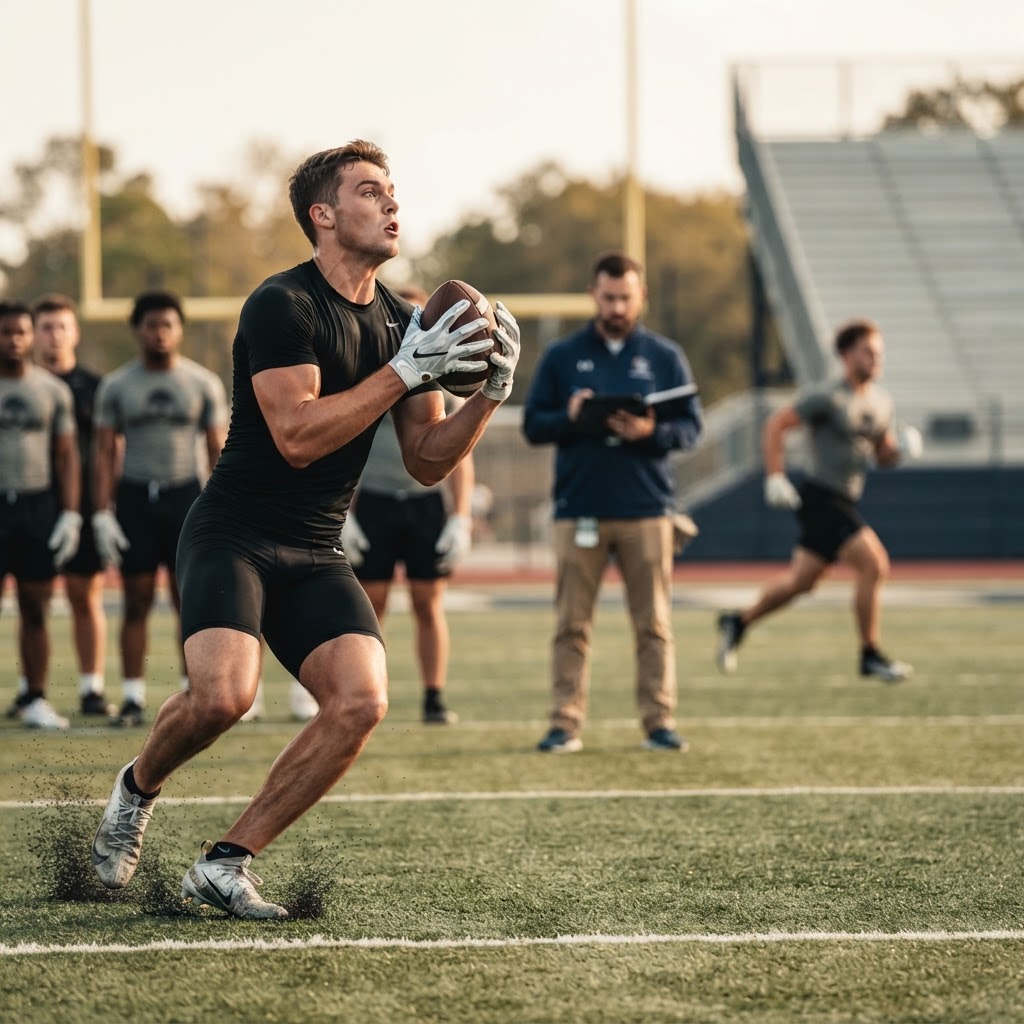
Speed: Your 40-yard dash time is the first number college coaches reference when comparing safeties across a region or recruiting class. Run a verified 40 at an evaluated event, not just at a team workout. Coaches discount self-reported times.
Change of Direction: The 5-10-5 shuttle tests the lateral quickness central to zone drops and man coverage pursuit. Add cone drill work to your training and track your times across the offseason.
Explosion: Vertical jump and broad jump measure lower-body power. These translate to your ball-in-air play, your ability to time a jump at the catch point and win contested plays. Include both in your verified testing profile.
Strength Base: Safeties who play in the box need a functional strength base to take on blocks and defeat tight end releases. Bench press, trap bar deadlift, and row movements build the upper-body and posterior chain strength that matters at the point of attack.
Film Strategy for Safety Recruits
Safety film requires more context than many other positions because defensive assignments are not visible without knowing the coverage call.
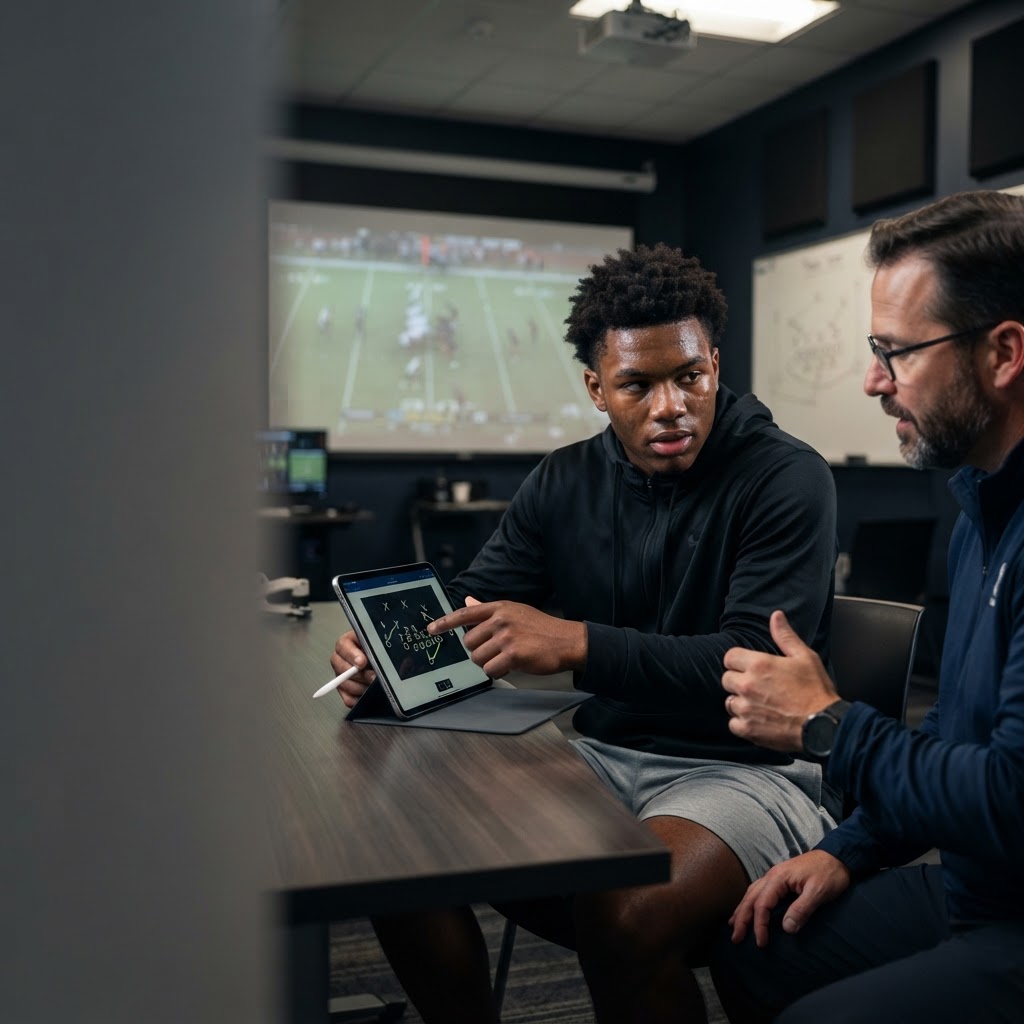
Add a film note or caption when possible. If your Hudl profile allows notes per clip, indicate the coverage call, Cover 2, quarters, man-free, so evaluators understand what they are watching. A play that looks like a coverage mistake in a vacuum may be a perfect zone drop in context.
Show a full game, not only highlights. Many programs ask for a full game film cut alongside a highlight reel. Choose a game where you played every snap, wins on film are valuable, but complete effort matters more than the scoreboard.
Prioritize tackles over proximity plays. A safety who is near plays but does not finish with the tackle does not show as well on film as one who takes on contact and makes the play. If your highlight selections are limited, choose clips where you deliver the final stop.
Include special teams. Many college programs use safety depth for special teams roles. Special teams film demonstrates effort, physicality, and coachability, all qualities coaches note in the evaluation process.
Recruiting Timelines and Outreach
Safety recruiting varies by level and region. Michigan athletes should be aware of the following general patterns.
Sophomore year: Focus on academic eligibility, verified testing, and early film production. Set up your Hudl profile. Begin identifying programs at every level whose defensive systems fit your skill set.
Junior year: Camp attendance is essential. Many college coaches evaluate safeties heavily at position-specific camps and combine events during the spring and summer before your junior season. This is the window when meaningful recruiting contact begins for most athletes. Complete questionnaires at every program that interests you.
Senior year: Keep your film current through your senior season. Late offers happen at every level, including FCS and D2, through the spring and early summer after your senior year. Do not stop marketing yourself before signing day.
Common Mistakes Safety Recruits Make
Sending only big-play clips. Interceptions and pick-sixes are impressive, but coaches want to see consistent technique. Include plays where you are in the right coverage, communicate the right call, and make the right decision without a turnover.
Skipping verified testing. Self-reported athleticism does not carry weight in recruiting evaluations. Attending a verified combine or testing event gives you credible numbers to send alongside film.
Omitting run-support film. Safeties who show only pass defense highlights look like coverage specialists. If you want to be seen as a complete player, which expands your options, include your best run-support reps.
Not completing questionnaires. A questionnaire submission places you in a school's database. It is the minimum action required to be seen. Athletes who do not complete questionnaires leave entire programs off the table for no reason.
How BLWE Supports Safety Development
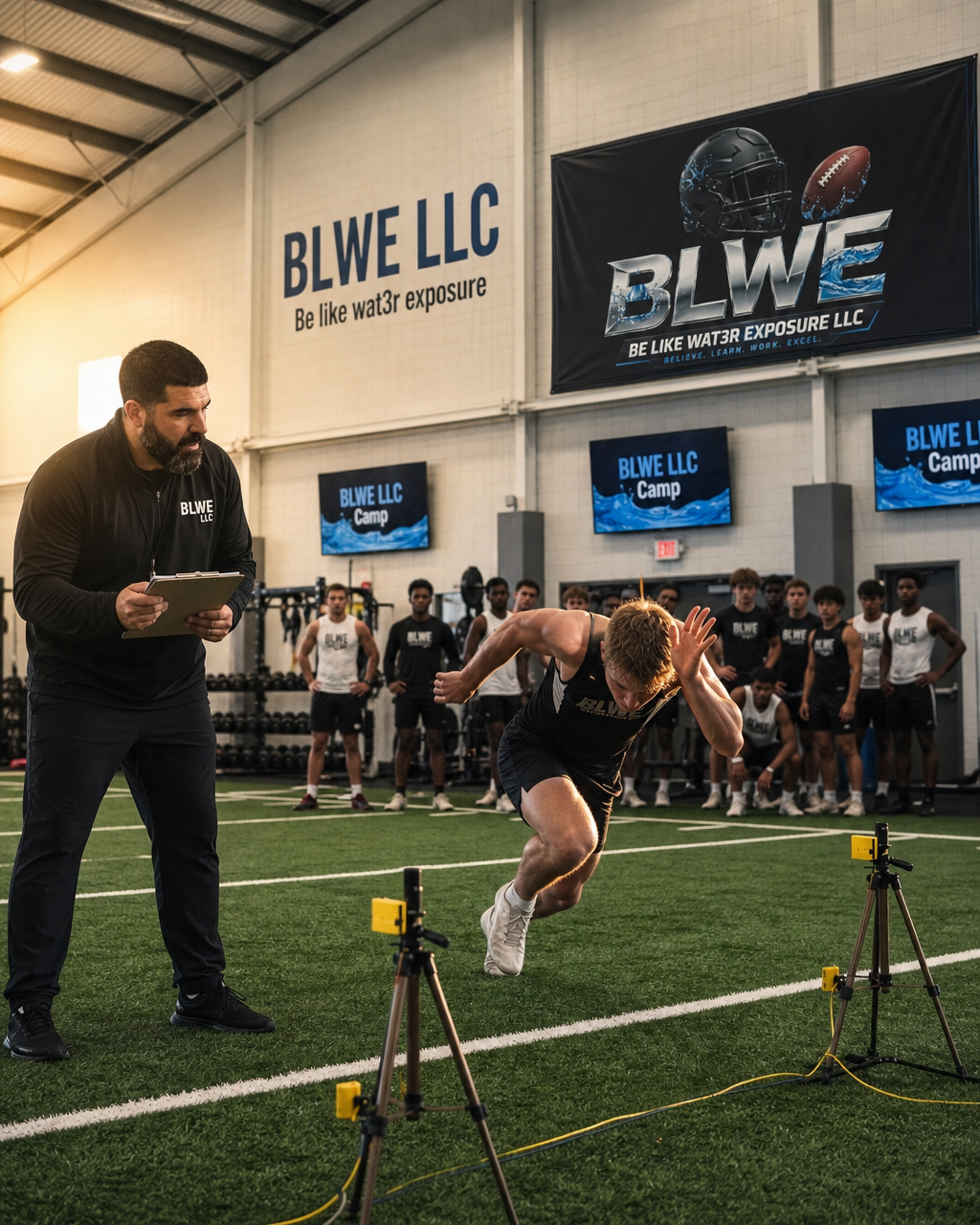
Be Like Wat3r Exposure works with Michigan and Midwest defensive backs, including safeties at both sub-positions, to build the verified testing profiles and film readiness that college coaches evaluate. Our camps and combines provide objective data, certified 40 times, vertical, broad jump, and shuttle, that athletes can send with confidence.
The Free Recruiting Readiness Snapshot at belikewaterexposure.net gives you a clear picture of where your recruiting profile stands: what is documented, what is missing, and what to work on first. It is not an athletic evaluation, it assesses the organization and completeness of your recruiting presence.
Michigan safety prospects: if you have not run a verified 40 and do not have clean game film uploaded, start there. The Snapshot will tell you what coaches are looking for before they call.
Disclaimer
Be Like Wat3r Exposure LLC provides recruiting education and exposure resources for student-athletes. Nothing in this article constitutes a guarantee of scholarship offers, athletic placement, or college admission. Recruiting decisions rest entirely with college coaching staffs and institutions. This content is for educational purposes only.
Know exactly where your recruiting profile stands.
Get Your Free Recruiting Readiness Snapshot