Michigan High School Football Recruiting: The Complete Guide for Athletes and Families
Primary keyword: Michigan high school football recruiting
Table of Contents
- Understanding Michigan's High School Football Landscape
- Who College Scouts Are Actually Looking For
- The Five Pillars of a Strong Recruiting Profile
- NCAA Contact Rules Michigan Athletes Need to Know
- Common Mistakes Michigan Recruits Make
- How BLWE Supports Michigan Football Recruiting
#TLDR
Michigan has eight MHSAA divisions, dozens of college programs within driving distance, and a recruiting ecosystem that rewards organized, documented athletes over raw talent alone. Start early, prove your numbers with verified testing, and build a plan, not just a highlight reel.
Understanding Michigan's High School Football Landscape
Michigan is one of the deepest high school football states in the country. The Michigan High School Athletic Association (MHSAA) organizes competition across eight divisions, from the largest schools in Division 1 to smaller programs in Division 8, and every division produces college-ready players every season.
That depth is both an opportunity and a challenge. With hundreds of high school programs across the state, talented athletes can go unnoticed simply because they attend a smaller school, play in a less-visible conference, or never organized their recruiting materials in a way that makes a coach's job easier.
College programs at every level, from MAC schools like Eastern Michigan, Central Michigan, and Western Michigan to programs across the Big Ten, FCS, and Division II, actively recruit Michigan players. Regional proximity means scouts and coaches attend MHSAA games regularly, but in-person observation alone does not move a recruit forward. Coaches want athletes who have already done the organizational work.
Who College Scouts Are Actually Looking For
Scouts evaluate three things at every level:
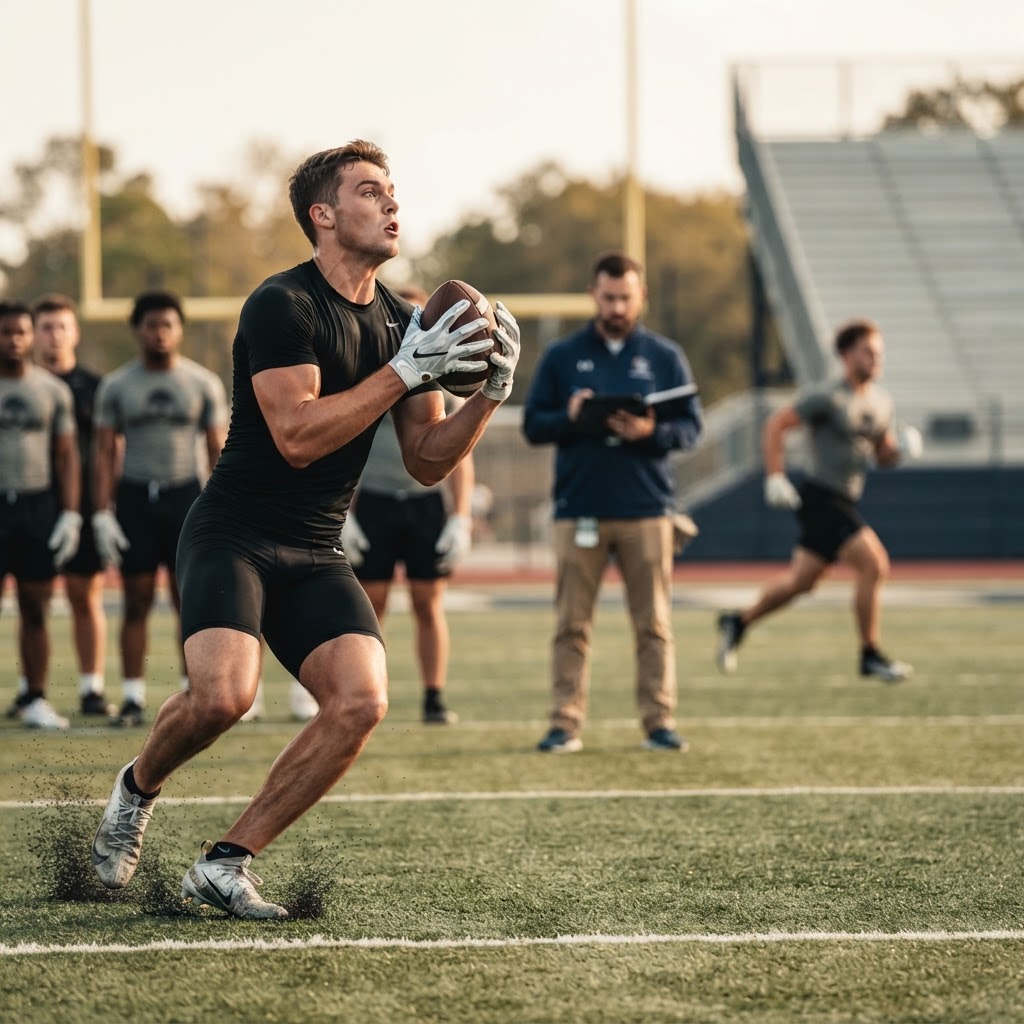
Athletic measurables. Speed, strength, explosiveness, and position-specific physical thresholds matter. Coaches want to see verified numbers, meaning testing that happened at a sanctioned camp, combine, or evaluation event with independent timing, not a number a player or parent self-reported.
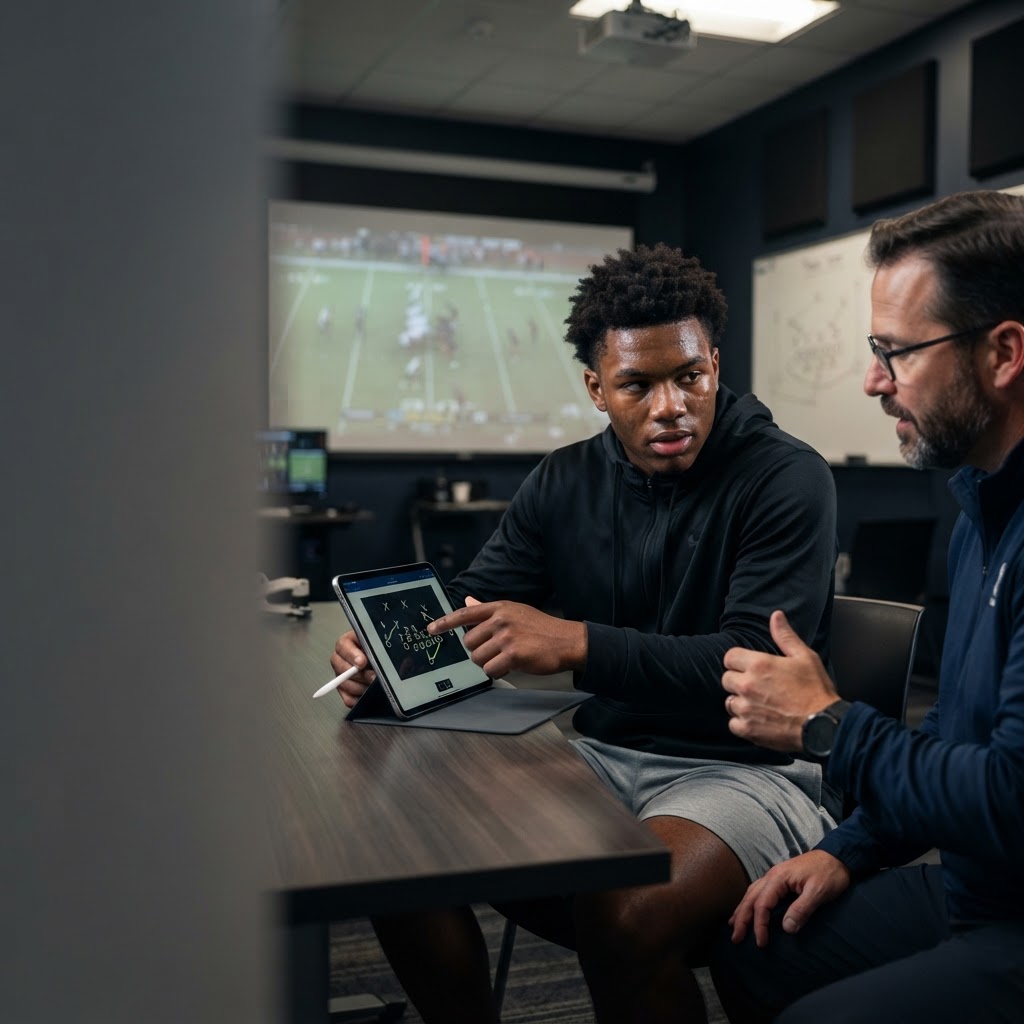
Football IQ and position fundamentals. A highlight tape that shows only big plays does not tell a coach how a player processes the game. Scouts watch for alignment, assignment execution, footwork, and reaction to unexpected situations. Full game film reveals far more than a two-minute highlight package.
Academic and eligibility standing. A player with elite measurables who cannot qualify academically is not a recruit, he is a liability. Coaches at every division check GPA, core course requirements, and NCAA Eligibility Center registration status before making serious contact.
What coaches at Michigan's in-state programs consistently note is that they want players who are proactive. An athlete who has registered with the NCAA Eligibility Center, organized their film, and can supply verified testing data at a moment's notice is far easier to recruit than one who has to scramble when a coach calls.
The Five Pillars of a Strong Recruiting Profile
1. Verified Athletic Testing
Self-reported times and measurements carry almost no weight with college coaches. A 4.5 forty you ran at a sanctioned combine with independent timing is credible. The same number listed on a recruiting website without verification is not. Attending a recognized combine, evaluation camp, or MHSAA/MHSFCA-affiliated event produces the documented results scouts trust.
2. Organized Film
Full game film from the current season is the most important piece of material you own. Your highlight reel supplements it but does not replace it. Coaches want to see how you play when the opponent adjusts, when you are not the center of attention, and when the play breaks down. Hudl is the standard platform for uploading and sharing Michigan high school game film.
3. Academic Transcript and NCAA Eligibility
Register with the NCAA Eligibility Center as early as your freshman year. Confirm your high school's course list is approved. Track your core GPA separately from your overall GPA because the NCAA calculates eligibility using only approved core courses.
4. A Targeted School List
Do not send a mass email blast to every program in the country. Research which schools fit your academic profile, desired major, roster needs at your position, and travel preferences. A focused list of 20 to 40 schools at the right level produces better results than 200 generic emails.
5. Proactive Coach Communication
Coaches can respond to athlete-initiated contact before they are permitted to initiate it themselves. Use that window. Send a concise introductory email with your film link, academic information, and verified measurables. Follow up. Be consistent without being overwhelming.
NCAA Contact Rules Michigan Athletes Need to Know
NCAA Division I football contact rules follow a specific timeline:
- Before September 1 of junior year: Coaches may send questionnaires and camp invitations but cannot initiate direct communication about recruiting.
- September 1 of junior year: DI coaches may begin sending written correspondence to prospects.
- June 15 after sophomore year: DI coaches can begin direct recruiting-like conversations with prospects. Source: SportsRecruits NCAA Rules
- April 1 of junior year: Official visits may begin for DI football prospects.
- December of senior year: Early signing period opens.
Division II programs have more flexibility and can initiate contact earlier. Division III schools set their own academic eligibility standards and operate under fewer contact restrictions.
Athletes who initiate contact before these windows open are not violating any rules, only the coaches are bound by them. Use your freshman and sophomore years to build your profile, attend camps, and start reaching out to coaching staffs on your target list.
Common Mistakes Michigan Recruits Make
Waiting until junior year to start. The athletes who attract serious interest in junior year are the ones who spent their freshman and sophomore years building a documented record. By the time junior film is available, coaches are already comparing you to recruits they have watched for two years.
Using self-reported numbers. A 4.4 forty that no one witnessed is worse than a verified 4.6, because it raises credibility questions about everything else in your profile.
Sending only a highlight tape. Coaches can tell when a highlight tape hides more than it shows. Pair your highlights with full game film at all times.
Ignoring academic eligibility until senior year. A player who discovers an eligibility problem in the fall of his senior year has almost no time to fix it. Track your core courses every semester.
Letting a third party manage everything. Recruiting services can add value, but the athlete and family must understand the process themselves. Coaches recruit the player, not the service.
How BLWE Supports Michigan Football Recruiting
Be Like Wat3r Exposure (BLWE) operates at the intersection of everything Michigan athletes need most: verified testing, film organization, honest evaluation, and purposeful exposure. BLWE's system does not project scholarships or manufacture hype, it builds the documented record that makes a recruit credible when a coach looks.
The free BLWE Recruiting Readiness Snapshot scores your current recruiting organization across five areas: academics and eligibility, film readiness, verified performance, recruiting communication, and purposeful exposure. It takes minutes to complete and gives you a clear starting point.
Get your free Recruiting Readiness Snapshot at belikewaterexposure.net
Know exactly where your recruiting profile stands.
Get Your Free Recruiting Readiness Snapshot